Alternative Medicine May Help Control Costs
April 20, 2013 — A major Nordic research project involving researchers from the University of Copenhagen has mapped the use of alternative treatment among multiple sclerosis patients, who often use dietary supplements, acupuncture and herbal medicine to manage the chronic disease. Researchers from five Nordic countries carried out the study. The results have been published in two scientific journals, the Scandinavian Journal of Public Health and Autoimmune Diseases.
“What we see is that patients do not usually use alternative treatments for treating symptoms, but as a preventative and strengthening element,” says Lasse Skovgaard, PhD candidate from the Faculty of Health and Medical Sciences and the Danish Multiple Sclerosis Society, who has been involved in conducting the questionnaire-based study among 3,800 people with MS in Denmark, Sweden, Norway, Finland and Iceland. Skovgaard draws attention to the significance of this new knowledge because "if people with chronic disease are better able to manage their lives, it can potentially save society large sums of money."
“We cannot ignore the fact that people with chronic disease use alternative treatments to a considerable extent, and that many of them seem to benefit from doing so” |
Multiple sclerosis is a chronic disease which attacks the central nervous system, and which can lead to a loss of mobility and sight. Denmark is one of the countries with the highest incidence of the disease worldwide, with approx. 12,500 MS patients. At the same time, the number of MS patients in the West is increasing, posing considerable challenges in respect of treatment, prevention and rehabilitation.
Access to knowledge bank
Together with researchers from the five other Nordic countries, Skovgaard has spent three years gathering the new data, and he is delighted at what it offers:
“Within the field of health research, it is often a question of studying the extent to which a particular type of drug affects a particular symptom. However, it is equally as important to look at how people with a chronic disease, for example, use different treatments to cope with their situation. Here, MS patients offer valuable experience. Their experiences constitute a knowledge bank which we must access and learn from,” he said.
“There is a lot of talk about ‘self-care competence’, in other words patients helping themselves to get their lives to function. Here, many people with a chronic disease find they benefit from using alternative treatments, so we should not ignore this possibility,” says Skovgaard.
At the same time, he emphasises that knowing more about why patients choose particular treatments is important in relation to improving patient safety because of the possible risks involved in combining conventional and alternative medicine.
Growing use of alternative treatments
According to the latest Health and Sickness Study from the Danish National Institute of Public Health (NIPH) in 2010, one in four Danes say that they have tried one or more types of alternative treatments within the past twelve months. Among MS patients, the use of alternative medicine has been growing steadily over the past fifteen years. In the researchers’ latest study, more than half of the respondents say that they either combine conventional and alternative medicine or only use alternative medicine.
“We cannot ignore the fact that people with chronic disease use alternative treatments to a considerable extent, and that many of them seem to benefit from doing so. It doesn’t help to only judge this from a medical point of view or say that alternative treatments are nonsense – rather, we must try to understand it,” says Skovgaard.
Highly qualified women top the list
The study shows that, among MS patients using alternative treatments, there is a significantly bigger proportion of people with a high level of education compared to those who do not use alternative treatments. There is also a larger proportion of highly paid people and of younger women.
“Some critics are of the opinion that when alternative treatments are so popular, it is because they appeal to naïve people looking for a miraculous cure. But our results indicate that it is primarily the well-educated segment that is subscribing to alternative treatments. And that using alternative treatments is part of a lifestyle choice,” Skovgaard said.
He hopes that the new knowledge will improve communication regarding how the chronically ill use alternative treatments in combination with conventional medicine:
“We see that so many people are combining conventional medicine with alternative treatment that it should be taken seriously by the health service."
"Until now, there hasn’t been much focus on the doctor-patient dialogue in relation to the alternative methods used by the chronically ill to manage their lives,” Skovgaard said. He said the research group is continuing to analyse the results and, among other things, is conducting several interview studies based on the results of the questionnaires. The interview studies will, for example, provide additional knowledge on how patients perceive the risks associated with using alternative medicine and explore why some patients turn their backs completely on conventional medicine.
Read the article in the Scandinavian Journal of Public Health.
Alternative Medicine Use on Rise in US Military
Feb. 3, 2013 — Active duty military members’ overall use of complementary and alternative medicine (CAM) is higher than that in comparable civilian surveys, according to a recent study in the January issue of The Journal of Alternative and Complementary Medicine. The study, titled “Military Report More Complementary and Alternative Medicine Use than Civilians,” was written by researchers at Samueli Institute in Alexandria, Va.; along with Palmer College of Chiropractic, Davenport, Iowa; Medical University of South Carolina, Charleston, S.C.; Finch & King, Inc., Minneapolis, Minn.; Research Triangle Institute, Research Triangle Park, N.C.; TRICARE Management Activities, Falls Church, Va.; and Abt Associates Inc., Cambridge, Mass.
The global survey asked more than 16,000 active duty participants about CAM use in the past year. The sample included Service members in military bases across the country. Participants were sorted by gender, service, region and pay grade. The analysis included prevalence of CAM use of a variety of types as well as demographic and lifestyle characteristics. The survey asked about use of 13 different CAM modalities including acupuncture, biofeedback, chiropractic, diet therapy, energy healing, folk remedies, guided imagery, massage therapy, herbal medicine, high-dose megavitamins, homeopathy, hypnosis, relaxation techniques and spiritual healing by others.
Approximately 45 percent of respondents reported using at least one type of CAM therapy in the previous year. The most commonly used therapies were massage (14.1 percent) and relaxation techniques (10.8 percent). After adjusting to the 2000 U.S. census, overall CAM use in the military (44.5 percent) was higher than that in comparable civilian surveys (36 percent and 38.3 percent).
“Studies continue to find that conventional medicine alone is not considered sufficient by many to address both the visible and invisible wounds in our Warfighters,” said Samueli Institute President and CEO, LTC (Ret) Wayne B. Jonas, MD, “Increasingly, research shows that integrative medicine—a coordinated combination of conventional and alternative approaches—is working to enhance healing for these Service members. The general public and the military have already moved in that direction and it is time the medical profession begins to catch up.”
Military personnel used nine CAM types significantly more than civilians. Civilians used only chiropractic, diet therapy and herbal medicine more than the military. Only two percent of civilians used guided imagery therapy, three percent used relaxation techniques and five to eight percent reported using massage therapy. In contrast, these CAM therapies are estimated to be three of the most commonly used therapies by military personnel. These three therapies are often used to help with stress and pain management, two condition of high prevalence in the military.
The study found participants who were older and more educated were more likely to use CAM. Researchers said this may reflect a more mature desire to resolve persistent health problems, and the income level to do so.
The study in The Journal of Alternative and Complementary Medicine was authored by Christine Goertz, DC, PhD; Bernadette P. Marriott, PhD; Michael D. Finch, PhD; Robert M. Bray, PhD; Thomas V. Williams, PhD; Laurel L. Hourani, PhD; Louise S. Hadden, BA; Heather L. Colleran, PhD; and Wayne B. Jonas, MD.
The study was supported by the U.S. Army Medical Research and Materiel Command under Award No. W81XWH-06-2-0009. The views, opinions and/or findings contained in this report are those of the author(s) and should not be construed as an official Department of the Army position, policy or decision unless so designated by other documentation.
Nearly half of all pregnant women in Australia consult a CAM practitioner
Jan. 18, 2013 — That’s a key finding of the first nationally representative study into the consultation of CAM practitioners by pregnant women, undertaken by Amie Steel and colleagues at the UTS Australian Research Centre in Complementary and Integrative Medicine (ARCCIM).
The study, Utilisation Of Complementary And Alternative Medicine (CAM) Practitioners Within Maternity Care Provision, surveyed 1835 women from across Australia.
Steel, a PhD candidate at UTS in the Australian Research Centre in Complementary and Integrative Medicine (ARCCIM,) says that the study makes a significant contribution to research in this area and identifies the need for a more considered and collaborative approach to maternal health care.
“There is not a lot of research on how women use CAM during pregnancy, especially regarding consultation patterns with conventional and CAM practitioners,” Ms Steel said.
“Our study found that a substantial proportion, 49.4 per cent, of women consulted a CAM practitioner for pregnancy-related health and identified a pattern of selective use across different CAM practitioner groups for different health conditions.”
Ms Steel says these results have significant implications for patient safety, access and coordination of maternity care.
“The relationship between concurrent types of care can be complex. For example, for women who see a GP for pregnancy related health care, consultation with an acupuncturist is associated with less frequent visits with their GP.
“We also found that women are making discretionary decisions about whom to consult depending on their immediate concerns, choosing chiropractors for back pain, massage therapists for neck pain and so on.
“This could be for a number of reasons, but it highlights the need for greater collaboration and inter-professional care in order to meet the needs of some women.”
The study was conducted as part of the Australian Longitudinal Study on Women’s Health and was published in BMC Pregnancy and Childbirth.
Science of placebos seen from alternative point of view
Nov. 2, 2012 — With the perspective of a scientist trained in acupuncture, Alison Adams is well positioned to explain why placebos may be misunderstood — and why they should be understood in the first place. "The placebo is a very powerful tool and the vast majority of people know absolutely nothing about it," said Adams, associate professor of biology at Northern Arizona University. "People think it's just trickery of the brain."
Dispelling the popular notion of a useless sugar pill, Adams said that a placebo "could potentially be an effective agent in its own right."
Adams arrived at an interest in the topic after a four-year foray into alternative medicine. Postdoctoral work at MIT and Genentech had taken her deep into yeast genetics and cell biology. But in 2000, Adams "took a break from science" to study acupuncture in England. "At the time, I was ready for something different," Adams said. "I was open to whatever direction I was going in." That openness extended to a collaboration with George Lewith, a professor of health research at the University of Southampton and a longtime researcher into alternative and complementary medicines.
But Adams hadn't left science very far behind. "I realized there's a lot of biology behind placebos," Adams said. "It turns out that when you're given a placebo pill, there's a whole series of steps that occur physiologically."
The fresh perspective remained with Adams when she returned to science, coming to NAU in 2004. Later she spent her sabbatical working on a project with Lewith studying how placebos are portrayed in the literature of drug trials. Their research, published in PLOS Clinical Trials, concluded that patients in such trials need better information about the benefits and side-effects of placebos.
Looking back to the lessons of acupuncture, Adams said, helps explain the origins of the "placebo response." In a word, it's all about context. "The response is something that actually gets initiated by the context of medical procedures," Adams said.
In Western medicine, seeing a doctor in a white coat helps the patient form an expectation that "the person is here to help them." By that reasoning, "an increased exposure of the patient to contextual factors in the clinic may maximize the innate response," Adams said. In other words, "a doctor spending more time with the patient might be better than prescribing more pills."
The contextual relationship explains why alternative medicine is so popular and effective, Adams said. In acupuncture, for example, an initial consultation often runs 90 minutes and includes a case history ranging from the details of the patient's birth to "different aches and pains throughout life. In Chinese medicine, a huge amount of attention is paid to little details."
Today Adams sees herself as an educator at the intersection of science and alternative medicine—an "unusual position," she said, but one that offers her an important role. "Because I understand the world of science as well as alternative medicine, I can communicate with both groups," Adams said. She's doing just that in a freshman seminar, Western and Alternative Medicine, that draws a diverse group of students. "We examine studies that look at the efficacy of various forms of alterative medicine and Western medicine," Adams said. "It helps the students appreciate that the body has tremendous self-healing powers."
Bean Used in Chinese Food Could Protect Against Sepsis
Oct. 26, 2012 (MANHASSET, NY) – Researchers at The Feinstein Institute for Medical Research have discovered that a bean commonly used in Chinese cuisine protects against the life-threatening condition sepsis. These findings are published in the current issue of Evidence-based Complementary and Alternative Medicine (eCAM).
It has been found that a deoxyribonucleic acid (DNA) protein, HMGB1, mediates inflammation. Inflammation is necessary for maintaining good health – without inflammation, wounds and infections would never heal. However, persistent and constant inflammation can damage tissue and organs, and lead to diseases such as sepsis. Sepsis affects approximately 750,000 Americans each year, 28 to 50 percent of whom die from the condition, and costs the nation's healthcare system nearly $17 billion annually. It is a potentially life-threatening complication of an infection or injury, and occurs when chemicals released into the bloodstream to fight the infection trigger inflammation throughout the body. The result is that organs become damaged, including liver, heart, lungs, kidney, and brain. If excessive damage occurs, it may be irreversible. Therefore, it is important to identify ways in which persistent and constant inflammation can be halted.
Neutralizing the protein HMGB1 protects against persistent and constant inflammation that results in damage to tissue and organs. Haichao Wang, PhD, and his colleagues, including Shu Zhu, MD and PhD, and Andrew E. Sama, MD, at the Feinstein Institute found that extract from mung bean (Vigna radiata), a bean native to India and commonly used in Chinese food and traditional medicine, reduced the release of HMGB1, thereby increasing survival rates in mice from 29.4 percent to 70 percent (P < 0.05).
“Many traditional medicinal herbs have been successfully developed into effective therapies for various inflammatory ailments, and now we have validated the therapeutic potential of another medicinal product, mung bean extract,” said Dr. Wang. “Demonstrating that mung bean extract has a positive effect on septic mice shows promise that this bean can also have a positive effect on septic humans – of course, additional studies are required to prove the safe and effective use in humans.”
The Feinstein Institute and its parent company, the North Shore-LIJ Health System, have been dedicated to studying and treating sepsis. In 2010, the Feinstein Institute hosted an international Merinoff Symposium dedicated to sepsis. This symposia attracted researchers, policymakers and other opinion leaders from around the world who identified that sepsis should be categorized as a medical emergency treatable with fluids and antibiotics within one hour of recognition. The health system mounted an aggressive sepsis prevention and early identification initiative that has reduced the health system’s sepsis mortality rate by 35 percent in the last four years, which translates into thousands of saved lives.
Mushroom Lengthens Survival Time in Dogs With Cancer, Penn Vet Study Finds
Sept. 10, 2012 (PHILADELPHIA) — Dogs with hemangiosarcoma that were treated with a compound derived from the Coriolus versicolor mushroom had the longest survival times ever reported for dogs with the disease. These promising findings offer hope that the compound may one day offer cancer patients — human and canine alike — a viable alternative or complementary treatment to traditional chemotherapies.
The study was conducted by two University of Pennsylvania School of Veterinary Medicine faculty. Dorothy Cimino Brown is professor and chair of the Department of Clinical Studies and director of the Veterinary Clinical Investigation Center. Jennifer Reetz is an attending radiologist in the Department of Clinical Studies. They published their findings in an open-access article in the journal Evidence-Based Complementary and Alternative Medicine.
The Coriolus versicolor mushroom, known commonly as the Yunzhi mushroom, has been used in traditional Chinese medicine for more than 2,000 years. The compound in the mushroom that is believed to have immune-boosting properties is polysaccharopeptide, or PSP. In the last two decades, some studies have suggested that PSP also has a tumor-fighting effect.
“There have been a series of studies looking at groups of people with cancer,” Cimino Brown said. “The issue with those studies is that they weren’t necessarily measuring what most people would think is the most clinically important result, which is, do people taking PSP live longer?”
To address this critical question, Cimino Brown and Reetz pursued a study in dogs with naturally occurring hemangiosarcoma, an aggressive, invasive cancer that arises from the blood cells and typically affects the spleen. It commonly strikes golden retrievers and German shepherds.
Fifteen dogs that had been diagnosed with hemangiosarcoma participated in the trial. Divided into three groups of five, each group received a different dose — 25, 50 or 100 mg/kg/day — of I’m-Yunity, a formulation of PSP that has been tested for consistency and good manufacturing processes.
The owners were instructed to give their dog capsules of I’m-Yunity, compounded by Penn pharmacists, daily. Each month, the owners brought their dogs to Penn’s Ryan Veterinary Hospital for follow-up visits. There, the researchers took blood samples and conducted ultrasounds to determine the extent that tumors developed or grew and spread in the dogs’ bodies.
Based on the ultimate endpoints — how quickly the tumors progressed and how long the dogs actually lived — the results of the researchers’ trial suggest that the I’m-Yunity was effectively fighting the tumors.
“We were shocked,” Cimino Brown said. “Prior to this, the longest reported median survival time of dogs with hemangiosarcoma of the spleen that underwent no further treatment was 86 days. We had dogs that lived beyond a year with nothing other than this mushroom as treatment.”
There were not statistically significant differences in survival between the three dosage groups, though the median survival time was highest in the 100 mg group, at 199 days, eclipsing the previously reported median survival time.
The results were so surprising, in fact, that the researchers asked Penn Vet pathologists to recheck the dogs’ tissue biopsies to make sure that the dogs really had the disease.
“They reread the samples and said, yes, it’s really hemangiosarcoma,” Cimino Brown said.
Chemotherapy is available for treating hemangiosarcoma, but many owners opt not to pursue that treatment once their dog is diagnosed.
“It doesn’t hugely increase survival, it’s expensive and it means a lot of back and forth to the vet for the dog,” Cimino Brown said. “So you have to figure in quality of life.”
While I’m-Yunity is not inexpensive, if proven effective, it would offer owners a way of extending their pet’s life without regular trips to the vet. As an added benefit, Cimino Brown and Reetz have found no evidence of adverse effects from the PSP treatment.
The researchers are now getting ready to pursue further trials of I’m-Yunity in dogs with hemangiosarcoma to confirm and refine their results. One trial will compare I’m-Yunity to a placebo for those owners who opt not to pursue chemotherapy in their pet and another will compare the compound to standard-of-care chemotherapy.
Depending on those results, veterinarians could eventually prescribe the compound for treating hemangiosarcoma, and perhaps other cancers, in dogs. The company that manufacturers I’m-Yunity may also pursue large-scale clinical trials in humans.
“Although hemangiosarcoma is a very sad and devastating disease,” Cimino Brown said, “in the long term, if we prove that this works, this treatment can be a really nice alternative for owners to have increased quality time with their pet at the end of its life.”
The study was funded by a grant from Chinese Medicine Holdings LTD.
Curry spice, omega-3 fatty acid preserve walking ability following spinal-cord injury
By Elaine Schmidt
June 26, 2012—UCLA researchers have discovered that a diet enriched with a popular omega-3 fatty acid and an ingredient in curry spice helps to preserve walking ability in rats that have experienced damage to their spinal cords.
The findings, published June 26 in the Journal of Neurosurgery: Spine, suggest that these dietary supplements help repair nerve cells and maintain neurological function after degenerative damage to the neck. "Normal aging often narrows the spinal canal, putting pressure on the spinal cord and injuring tissue," said principal investigator Dr. Langston Holly, associate professor of neurosurgery at the David Geffen School of Medicine at UCLA. "While surgery can relieve the pressure and prevent further injury, it can't repair damage to the cells and nerve fibers. We wanted to explore whether dietary supplementation could help the spinal cord heal itself."
The UCLA team studied two groups of rats with a condition that simulated cervical myelopathy — a progressive disorder that often occurs in people with spine-weakening conditions like rheumatoid arthritis and osteoporosis. Cervical myelopathy can lead to disabling neurological symptoms, such as difficulty walking, neck and arm pain, hand numbness, and weakness of the limbs. It's the most common cause of spine-related walking problems in people over 55.
The first group of animals was fed rat chow that replicated a Western diet high in saturated fats and sugar. The second group consumed a standard diet supplemented with docosahexaenoic acid (DHA) and curcumin, a compound in the Indian curry spice turmeric. A third set of rats received a standard rat diet and served as a control group.
Why these supplements?
DHA is an omega-3 fatty acid shown to repair damage to cell membranes. Curcumin is a strong antioxidant that previous studies have linked to tissue repair. Both reduce inflammation. "The brain and spinal cord work together, and years of research demonstrate that supplements like DHA and curcumin can positively influence the brain," said study co-author Fernando Gomez-Pinilla, a professor of neurosurgery at UCLA. "We suspected that what works in the brain may also work in the spinal cord. When we were unable to find good data to support our hypothesis, we decided to study it ourselves."
The researchers recorded a baseline of the rats walking and re-examined the animals' gait on a weekly basis. As early as three weeks, the rats eating the Western diet demonstrated measurable walking problems that worsened as the study progressed. Rats fed a diet enriched with DHA and curcumin walked significantly better than the first group even six weeks after the study's start.
Next, the scientists examined the rats' spinal cords to evaluate how diet affected their injury on a molecular level. They measured levels of three markers respectively linked to cell-membrane damage, neural repair and cellular communication. The rats that ate the Western diet showed higher levels of the marker linked to cell-membrane damage. In contrast, the DHA and curcumin appeared to offset the injury's effect in the second group, which displayed marker levels that were equivalent to the control group. Levels of the markers linked to neural repair and cellular communication were significantly lower in the rats raised on the Western diet. Again, levels in the animals fed the supplemented diet appeared similar to those of the control group.
"DHA and curcumin appear to invoke several molecular mechanisms that preserved neurological function in the rats," said Gomez-Pinilla. "This is an exciting first step toward understanding the role that diet plays in protecting the body from degenerative disease."
"Our findings suggest that diet can help minimize disease-related changes and repair damage to the spinal cord," Holly said. "We next want to look at other mechanisms involved in the cascade of events leading up to chronic spinal-cord injury. Our goal is to identify which stages will respond best to medical intervention and identify effective steps for slowing the disease process."
Other co-authors included Dr. Donald Blaskiewicz, Aiguo Wu, Cameron Feng and Zhe Ying, all of UCLA. Their research was supported by grants from the National Institutes of Health (RO1 NS056413) and the Craig H. Neilsen Foundation.
Lifelong brain-stimulating habits linked to lower Alzheimer’s protein
January 23, 2012 — A new study led by researchers at the University of California, Berkeley, provides even more reason for people to read a book or do a puzzle, and to make such activities a lifetime habit.
Brain scans revealed that people with no symptoms of Alzheimer’s who engaged in cognitively stimulating activities throughout their lives had fewer deposits of beta-amyloid, a destructive protein that is the hallmark of the disease.
While previous research has suggested that engaging in mentally stimulating activities – such as reading, writing and playing games – may help stave off Alzheimer’s later in life, this new study identifies the biological target at play. This discovery could guide future research into effective prevention strategies.
“These findings point to a new way of thinking about how cognitive engagement throughout life affects the brain,” said study principal investigator Dr. William Jagust, a professor with joint appointments at UC Berkeley’s Helen Wills Neuroscience Institute, the School of Public Health and Lawrence Berkeley National Laboratory. “Rather than simply providing resistance to Alzheimer’s, brain-stimulating activities may affect a primary pathological process in the disease. This suggests that cognitive therapies could have significant disease-modifying treatment benefits if applied early enough, before symptoms appear.”
An estimated 5.4 million Americans live with Alzheimer’s disease, but the numbers are growing as baby boomers age. Between 2000 and 2008, deaths from Alzheimer’s increased 66 percent, making it the sixth-leading killer in the country. There is currently no cure, but a draft of the first-ever National Alzheimer’s Plan, released this week, revealed that the U.S. government is aiming for effective Alzheimer’s treatments by 2025.
The new study, published Jan. 23 in the Archives of Neurology, puts the spotlight on amyloid – protein fibers folded into tangled plaques that accumulate in the brain. Beta-amyloid is considered the top suspect in the pathology of Alzheimer’s disease, so finding a way to reduce its development has become a major new direction of research.
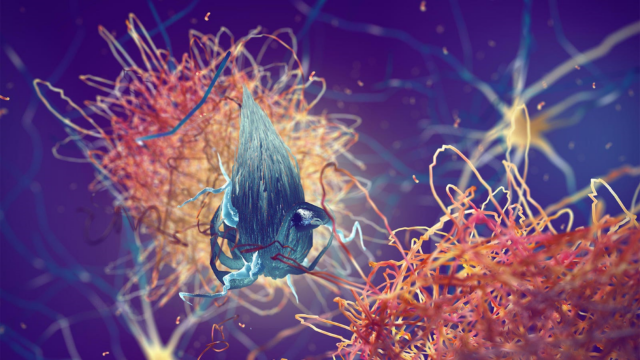
A molecular model of amyloid protein fibrils. Formed when mis-folded proteins self-assemble into fibrous sheet structures, they are found in the brains of sufferers of Alzheimer's disease. The researchers note that the buildup of amyloid can also be influenced by genes and aging – one-third of people age 60 and over have some amyloid deposits in their brain – but how much reading and writing one does is under each individual’s control.
“This is the first time cognitive activity level has been related to amyloid buildup in the brain,” said study lead author Susan Landau, research scientist at the Helen Wills Neuroscience Institute and the Berkeley Lab. “Amyloid probably starts accumulating many years before symptoms appear. So it’s possible that by the time you have symptoms of Alzheimer’s, like memory problems, there is little that can be done to stop disease progression. The time for intervention may be much sooner, which is why we’re trying to identify whether lifestyle factors might be related to the earliest possible changes.”
The researchers asked 65 healthy, cognitively normal adults aged 60 and over (average age was 76) to rate how frequently they participated in such mentally engaging activities as going to the library, reading books or newspapers, and writing letters or email. The questions focused on various points in life from age 6 to the present.
The participants took part in extensive neuropsychological testing to assess memory and other cognitive functions, and received positron emission tomography (PET) scans at the Berkeley Lab using a new tracer called Pittsburgh Compound B that was developed to visualize amyloid. The results of the brain scans of healthy older individuals with various levels of lifetime cognitive activity were compared with those of 10 patients diagnosed with Alzheimer’s disease and 11 healthy people in their 20s.
The researchers found a significant association between higher levels of cognitive activity over a lifetime and lower levels of beta-amyloid in the PET scans. They analyzed the impact of other factors such as memory function, physical activity, self-rated memory ability, level of education and gender, and found that lifelong cognitive engagement was independently linked to amyloid deposition.
Notably, the researchers did not find a strong connection between amyloid deposition and levels of current cognitive activity alone.
“What our data suggests is that a whole lifetime of engaging in these activities has a bigger effect than being cognitively active just in older age,” said Landau.
The researchers are careful to point out that the study does not negate the benefits of kicking up brain activity in later years.
“There is no downside to cognitive activity. It can only be beneficial, even if for reasons other than reducing amyloid in the brain, including social stimulation and empowerment,” said Jagust. “And actually, cognitive activity late in life may well turn out to be beneficial for reducing amyloid. We just haven’t found that connection yet.”
Other study authors include researchers from UC San Francisco’s Memory and Aging Center and Department of Neurology, and Rush University Medical Center’s Alzheimer’s Disease Center in Chicago.
The National Institutes of Health and the Alzheimer’s Association helped support this research.
Walking Slows Progression of Alzheimer's
Walking may slow cognitive decline in adults with mild cognitive impairment (MCI) and Alzheimer's disease, as well as in healthy adults, according to a study presented today at the annual meeting of the Radiological Society of North America (RSNA).
"We found that walking five miles per week protects the brain structure over 10 years in people with Alzheimer's and MCI, especially in areas of the brain's key memory and learning centers," said Cyrus Raji, Ph.D., from the Department of Radiology at the University of Pittsburgh in Pennsylvania. "We also found that these people had a slower decline in memory loss over five years."
Alzheimer's disease is an irreversible, progressive brain disease that slowly destroys memory and cognitive skills. According to the National Institute on Aging, between 2.4 million and 5.1 million Americans have Alzheimer's disease. Based on current population trends, that number is expected to increase significantly over the next decade.
In cases of MCI, a person has cognitive or memory problems exceeding typical age-related memory loss, but not yet as severe as those found in Alzheimer's disease. About half of the people with MCI progress to Alzheimer's disease.
"Because a cure for Alzheimer's is not yet a reality, we hope to find ways of alleviating disease progression or symptoms in people who are already cognitively impaired," Dr. Raji said.
For the ongoing 20-year study, Dr. Raji and colleagues analyzed the relationship between physical activity and brain structure in 426 people, including 299 healthy adults (mean age 78), and 127 cognitively impaired adults (mean age 81), including 83 adults with MCI and 44 adults with Alzheimer's dementia.
Patients were recruited from the Cardiovascular Health Study. The researchers monitored how far each of the patients walked in a week. After 10 years, all patients underwent 3-D MRI exams to identify changes in brain volume.
"Volume is a vital sign for the brain," Dr. Raji said. "When it decreases, that means brain cells are dying. But when it remains higher, brain health is being maintained."
In addition, patients were given the mini-mental state exam (MMSE) to track cognitive decline over five years. Physical activity levels were correlated with MRI and MMSE results. The analysis adjusted for age, gender, body fat composition, head size, education and other factors.
The findings showed across the board that greater amounts of physical activity were associated with greater brain volume. Cognitively impaired people needed to walk at least 58 city blocks, or approximately five miles, per week to maintain brain volume and slow cognitive decline. The healthy adults needed to walk at least 72 city blocks, or six miles, per week to maintain brain volume and significantly reduce their risk for cognitive decline.
Over five years, MMSE scores decreased by an average of five points in cognitively impaired patients who did not engage in a sufficient level of physical activity, compared with a decrease of only one point in patients who met the physical activity requirement.
"Alzheimer's is a devastating illness, and unfortunately, walking is not a cure," Dr. Raji said. "But walking can improve your brain's resistance to the disease and reduce memory loss over time."
Vitamin B12 may protect brain
 |
Brain scans of those with high B12 levels (right) and those with low B12 levels (left). |
Vitamin B12, a nutrient found in meat, fish and milk, may protect against brain volume loss in older people, according to a University of Oxford study.
For the study, 107 people between the ages of 61 and 87 underwent brain scans, memory testing and physical exams. The researchers from the Oxford Project to Investigate Memory and Ageing (OPTIMA) also collected blood samples to check vitamin B12 levels. Brain scans and memory tests were also performed again five years later.
The study, published in the journal Neurology, found that people who had higher vitamin B12 levels were six times less likely to experience brain shrinkage compared with those who had lower levels of the vitamin in their blood. None of the people in the study had vitamin B12 deficiency.
"Many factors that affect brain health are thought to be out of our control, but this study suggests that simply adjusting our diets to consume more vitamin B12 through eating meat, fish, fortified cereals or milk may be something we can easily adjust to prevent brain shrinkage and so perhaps save our memory," says Anna Vogiatzoglou of the Department of Physiology, Anatomy and Genetics at Oxford University.
"Research shows that vitamin B12 deficiency is a public health problem, especially among the elderly, so more vitamin B12 intake could help reverse this problem. Without carrying out a clinical trial, we acknowledge that it is still not known whether B12 supplementation would actually make a difference in elderly persons at risk for brain shrinkage.
"Previous research on the vitamin has had mixed results and few studies have been done specifically with brain scans in elderly populations. We tested for vitamin B12 levels in a unique, more accurate way by looking at two certain markers for it in the blood," adds Ms Vogiatzoglou.
Ms Vogiatzoglou says the study did not look at whether taking vitamin B12 supplements would have the same effect on memory.
The study was supported by the UK Alzheimer's Research Trust, the Medical Research Council, the Charles Wolfson Charitable Trust, the Norwegian Foundation for Health and Rehabilitation through the Norwegian Health Association, Axis-Shield plc and the Johan Throne Holst Foundation for Nutrition Research.
Vitamin E Associated With Lower Dementia Risk
Consuming more vitamin E through the diet appears to be associated with a lower risk of dementia and Alzheimer's disease, according to a report in the July issue of Archives of Neurology, one of the JAMA/Archives journals.
Oxidative stress—damage to the cells from oxygen exposure—is thought to play a role in the development of Alzheimer's disease, according to background information in the article. Experimental data suggest that antioxidants, nutrients that help repair this damage, may protect against the degeneration of nervous system cells. "Although clinical trials have shown no benefit of antioxidant supplements for Alzheimer's disease, the wider variety of antioxidants in food sources is not well studied relative to dementia risk; a few studies, with varying lengths of follow-up, have yielded inconsistent results," the authors write.
Elizabeth E. Devore, Sc.D., of Erasmus Medical Center, Rotterdam, the Netherlands, and colleagues assessed 5,395 participants 55 years and older who did not have dementia between 1990 and 1993. Participants underwent a home interview and two clinical examinations at the beginning of the study, and provided dietary information through a two-step process involving a meal-based checklist and a food questionnaire.
The researchers focused on four antioxidants: vitamin E, vitamin C, beta carotene and flavonoids. The major food sources of vitamin E were margarine, sunflower oil, butter, cooking fat, soybean oil and mayonnaise; vitamin C came mainly from oranges, kiwi, grapefruit juice, grapefruit, cauliflower, red bell peppers and red cabbage; beta carotene, from carrots, spinach, vegetable soup, endive and tomato; and flavonoids from tea, onions, apples and carrots.
Over an average of 9.6 years of follow-up, 465 participants developed dementia; 365 of those were diagnosed with Alzheimer's disease. After adjusting for other potentially related factors, the one-third of individuals who consumed the most vitamin E (a median or midpoint of 18.5 milligrams per day) were 25 percent less likely to develop dementia than the one-third of participants who consumed the least (a median of 9 milligrams per day). Dietary intake levels of vitamin C, beta carotene and flavonoids were not associated with dementia risk. Results were similar when only the participants diagnosed with Alzheimer's disease were assessed.
"The brain is a site of high metabolic activity, which makes it vulnerable to oxidative damage, and slow accumulation of such damage over a lifetime may contribute to the development of dementia," the authors write. "In particular, when beta-amyloid (a hallmark of pathologic Alzheimer's disease) accumulates in the brain, an inflammatory response is likely evoked that produces nitric oxide radicals and downstream neurodegenerative effects. Vitamin E is a powerful fat-soluble antioxidant that may help to inhibit the pathogenesis of dementia."
Future studies are needed to evaluate dietary intake of antioxidants and dietary risks, including different points at which consuming more antioxidants might reduce risk, the authors conclude. (Arch Neurol. 2010;67[7]:819-825.)